

Depression is one of the most common mental illnesses worldwide. According to recent data from the National Institute of Mental Health (NIMH), 21.0 million adults (18+) and 4.1 million adolescents (12-17) report having one or more depressive episodes.
Depression is more than feeling down. This condition may convince you that you’re alone, inadequate, or powerless, causing things that once brought you joy to leave you feeling empty. Depression is a master storyteller and deceiver.
It makes little difference how intelligent, successful, or well-liked you are—depression can leave you feeling cornered and exhausted.
According to the American Psychiatric Association, depression is a common and serious medical illness that affects how a person thinks, feels, and behaves. There is no “on/off” switch for depression. As artist Anthony Benevidez expressed it:
“Depression is living in a body that fights to survive, with a mind that tries to die.”
Depression can lead to emotional, social, and physical problems—which decrease a person’s ability to function day-to-day. It can even cause a person to question their role, abilities, and purpose.
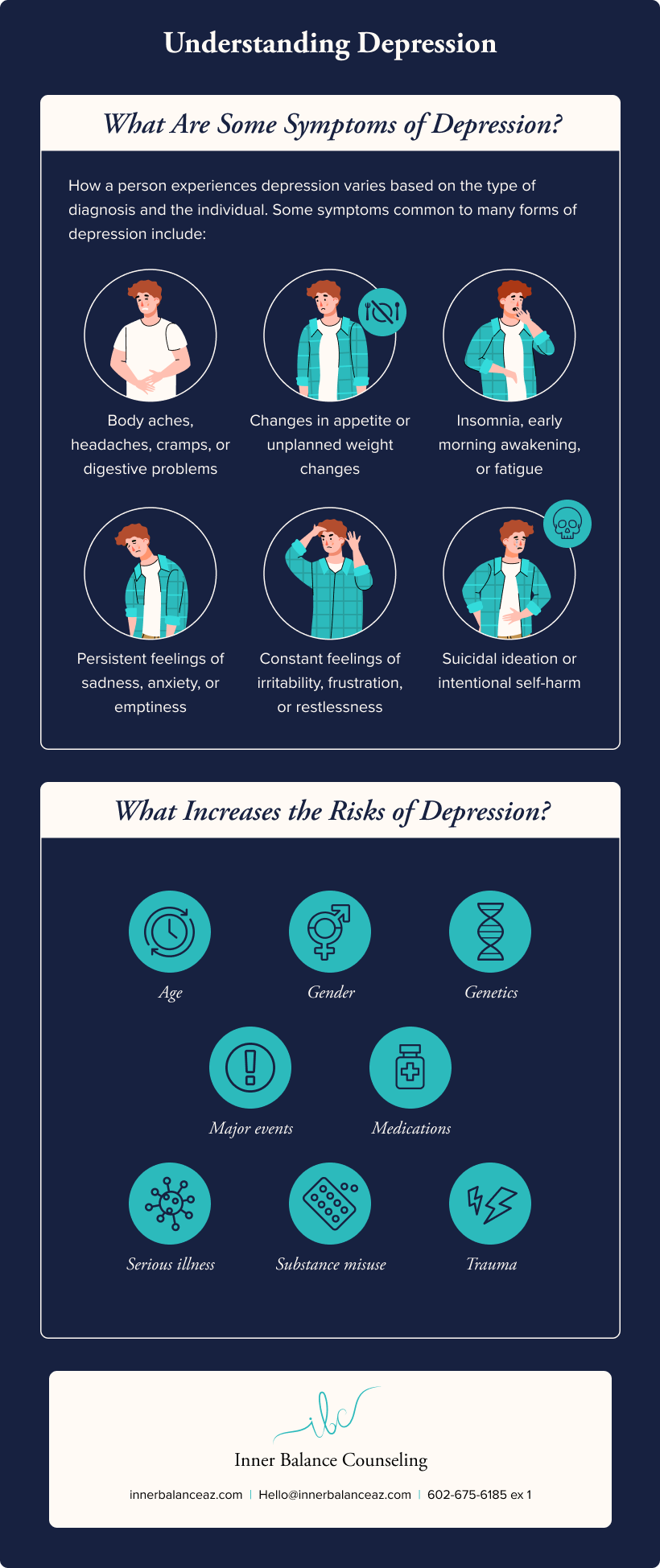
Symptoms can vary depending on depression type. Below is a list of common symptoms linked to depression:
Those experiencing depression will experience a combination of symptoms most of the day, nearly every day, for two weeks or longer.
Grief is a common and normal response to loss. Most people grieve following the death of a loved one, relationship separation, or job loss. These people often claim to feel depressed.
There is sometimes a misperception that grief and depression are the same. Both grief and depression involve intense sadness and withdrawal but differ in other ways.
Some of these include:
Anyone can experience loss and grief; however, not everyone will experience clinical depression because of grief.
Millions of chemical reactions make up the system responsible for moods, perceptions, and life experiences. Researchers used to believe that depression was caused by an over or underabundance of specific brain chemicals (neurotransmitters). We now know that this isn’t entirely true.
Depression does involve neurotransmitters, but it is not a simple matter of one chemical being too low or too high. Research by Harvard Medical School suggests that many chemicals are involved, working inside and outside the nerve cells to affect the body.
Depression is a complex illness because there is no one specific cause for it. There are several factors that contribute to depression, including genetics, stress, and problems with mood regulation in the brain.
According to the Depression and Bipolar Support Alliance (DBSA), certain factors increase a person’s risk of developing clinical depression. These include:
There are a variety of criteria medical professionals use to differentiate unique depression types. Some have obvious causes, while others may seem to appear out of nowhere.
Here is a list of depressive disorders in the diagnostic classification of the DSM-5.
Don’t worry—you’re not alone, and help is available.
Depression has a high treatment success rate, even in acute cases. The earlier depression treatment begins, the more effective it is.
If you or someone you know is currently feeling suicidal, immediately call the 24/7 Suicide & Crisis Lifeline at 988.
This Lifeline provides support for people in duress and shares resources for prevention and crisis.

Check Your
Insurance Coverage
Testimonials

“The staff at Inner Balance Counseling is very professional and supportive. They guided me to Jennifer Rizzo. I’m very glad that they did. Jennifer is professional, caring, and always knew what to do and say. Jennifer is also very accommodating to my needs and schedule. I highly recommend Jennifer and Inner Balance Counseling.”
-Richard L.
Meet Our Providers

YOUR PAST DOESN’T DEFINE YOUR FUTURE