

Giving birth is often described as one of life’s most beautiful experiences, but it’s also one of the most physically, emotionally, and mentally demanding experiences.
Pregnancy and childbirth take a significant toll on the body, and the transition into motherhood, or adding a newborn into the mix, can be overwhelming, exhausting, and isolating. While new life brings joy, it also brings sleepless nights, difficult hormonal shifts, and the societal pressure to “do it all.”
For many women, this time in their lives is compounded by postpartum depression. In this guide, we’ll give you all the information you need to know about postpartum depression, including:
It doesn’t matter if you’re a first-time mom or experienced in giving birth; postpartum depression can still affect you.
Related Resources: Depression, High Functioning Depression
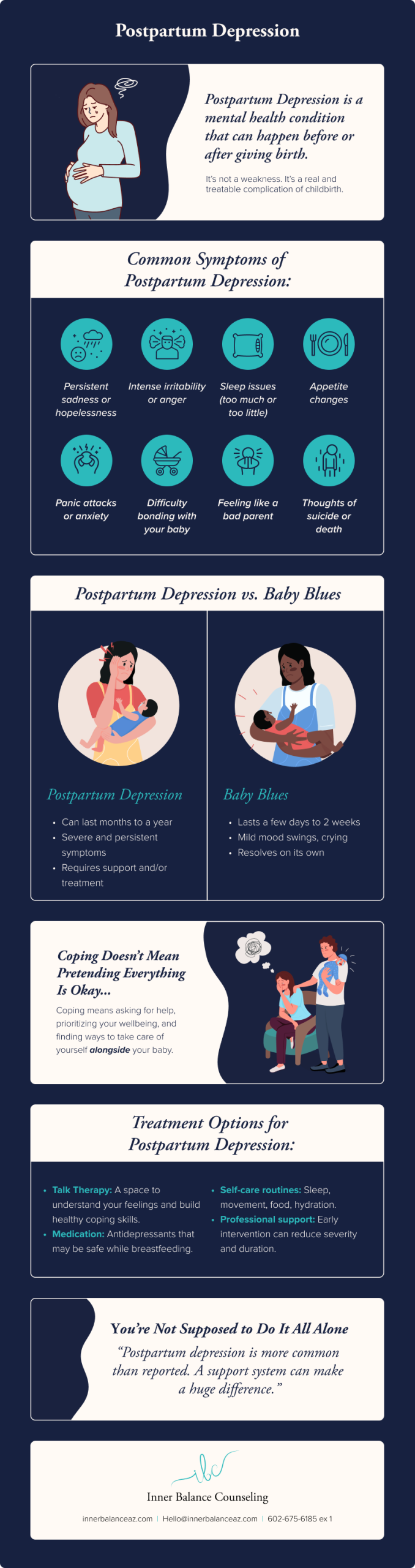
The symptoms of postpartum depression are intense and may be mistaken for baby blues. However, symptoms of baby blues are less intense and last a couple of days to a week. The symptoms of baby blues include:
Postpartum depression shares similar symptoms, but they last much longer and are much more intense.
After giving birth, there are many major changes to adjust to, and the changes can be difficult. Not only is the transition into motherhood difficult, but childbirth triggers major hormonal shifts that last until the body “resets” after the pregnancy.
Perinatal depression usually begins a couple of weeks after giving birth, but it can begin shortly before. The symptoms of postpartum depression include:
Untreated postpartum depression can last many months up to a year. These symptoms make it difficult for mothers to bond with their newborns and create an extremely challenging situation.
The first few weeks with a newborn are confusing, chaotic, and often overwhelming.
It’s common for mothers to neglect their own care as they adjust to caring for a newborn. This makes it difficult to notice the signs of postpartum depression before they become severe.
The signs of perinatal depression include:
If you’re asking, “Do I have postpartum depression?” it’s a good idea to get in contact with a trained professional. There’s nothing wrong with asking for help, and it should be encouraged.
Request a consultation with Inner Balance Counseling to ask any questions you may have about postpartum depression.
Postpartum depression can begin before giving birth, but typically begins a week to a year after birth.
Before and during childbirth, the body releases a significant amount of hormones. This is how the body prepares for the extreme task of giving birth. However, it can cause alarming mental health symptoms.
Because these hormonal changes occur before childbirth, postpartum depression can start then.
Postpartum depression can last up to a year after giving birth. However, this doesn’t mean you have to wait for symptoms to get better. When left untreated, postpartum depression can wreak havoc.
Talking with a healthcare provider and getting the treatment you need can speed up the recovery process. In these conversations, be honest about how you feel.
Fathers can experience postpartum depression, although it is different from what mothers experience.
Fathers can experience paternal postpartum depression, and its symptoms include:
Around 8% to 10% of fathers will develop postpartum depression, and it can negatively affect their relationship with their newborns and their partner.
Fathers who think they’re experiencing paternal postpartum depression should seek out treatment with a trained health provider and counselor.
Roughly 1 in 7 people who give birth will experience postpartum depression. However, this number is much lower than the actual prevalence. About 50% of cases go undocumented due to the stigma surrounding postpartum depression.
Related Resources: Mom Guilt: What it is and How to Combat it
Openly talk with the people closest to you about how you’re feeling and make plans for check-ins. Isolation is your worst enemy, so don’t be afraid to reach out to other mothers and ask for and accept help.
If you have a partner, the prenatal period is the time to strengthen your relationship. Things are about to get chaotic, so try to prioritize each other before the baby comes.
This might be hard, but one of the most important ways you can avoid postpartum depression is to take care of yourself. The best case scenario would include long baths and plenty of time to recharge, but let’s be honest–most mothers of newborns would be lucky to shower once a week.
It’s much work to take care of a newborn, let alone yourself. However, getting the bare necessities is enough to help combat postpartum depression.
Related Resources: Stress Management
You don’t need to have postpartum depression to seek professional help. Meeting with a counselor before childbirth can help prepare you and your partner for the big changes in your home and your body.
While meeting with a counselor about postpartum depression, you’ll learn coping skills and find ways to strengthen your support system.
Postpartum depression is treated like most mental health issues:
Talking through your issues with a counselor or trained health professional can help you frame your thoughts and work through your problems.
During counseling, you’ll learn to build healthy coping mechanisms and find ways to reframe negative thinking patterns.
Your healthcare provider or counselor may want to prescribe medications to help decrease negative symptoms. If you’re breastfeeding, medication will enter your breast milk. However, many medications can be safely taken while breastfeeding. Talk with your healthcare provider about medication interactions with breastfeeding.

Postpartum depression is not something that will resolve without help. If you’re having a hard time functioning or are experiencing major depressive episodes, seek professional counseling.
Check Your
Insurance Coverage
Testimonials

“The staff at Inner Balance Counseling is very professional and supportive. They guided me to Jennifer Rizzo. I’m very glad that they did. Jennifer is professional, caring, and always knew what to do and say. Jennifer is also very accommodating to my needs and schedule. I highly recommend Jennifer and Inner Balance Counseling.”
-Richard L.
Meet Our Providers

YOUR PAST DOESN’T DEFINE YOUR FUTURE