

It’s common to feel a rush of anxiety in certain social situations, like walking into a party where you don’t know anyone, running into your ex unexpectedly, or trying to figure out what you’re supposed to say at a funeral.
For someone with social anxiety, every social interaction can induce this same level of dread or panic. Whether it’s talking on the phone, speaking to a cashier, or even hanging out with friends, social anxiety can make it feel like you’re always saying the wrong things or others are constantly judging you for “being weird”.
To figure out why even the simplest interactions can feel so overwhelming, let’s take a look at what social anxiety is, what the signs and symptoms are, and how it can be treated.
This type of anxiety causes people to perceive everyday social interactions as dangerous or threatening. It triggers the body’s fight-or-flight response, leading them to feel the need to escape or avoid the situation altogether.
Someone with social anxiety will usually experience the physical symptoms of anxiety when they’re in an uncomfortable social situation. These physical symptoms include:
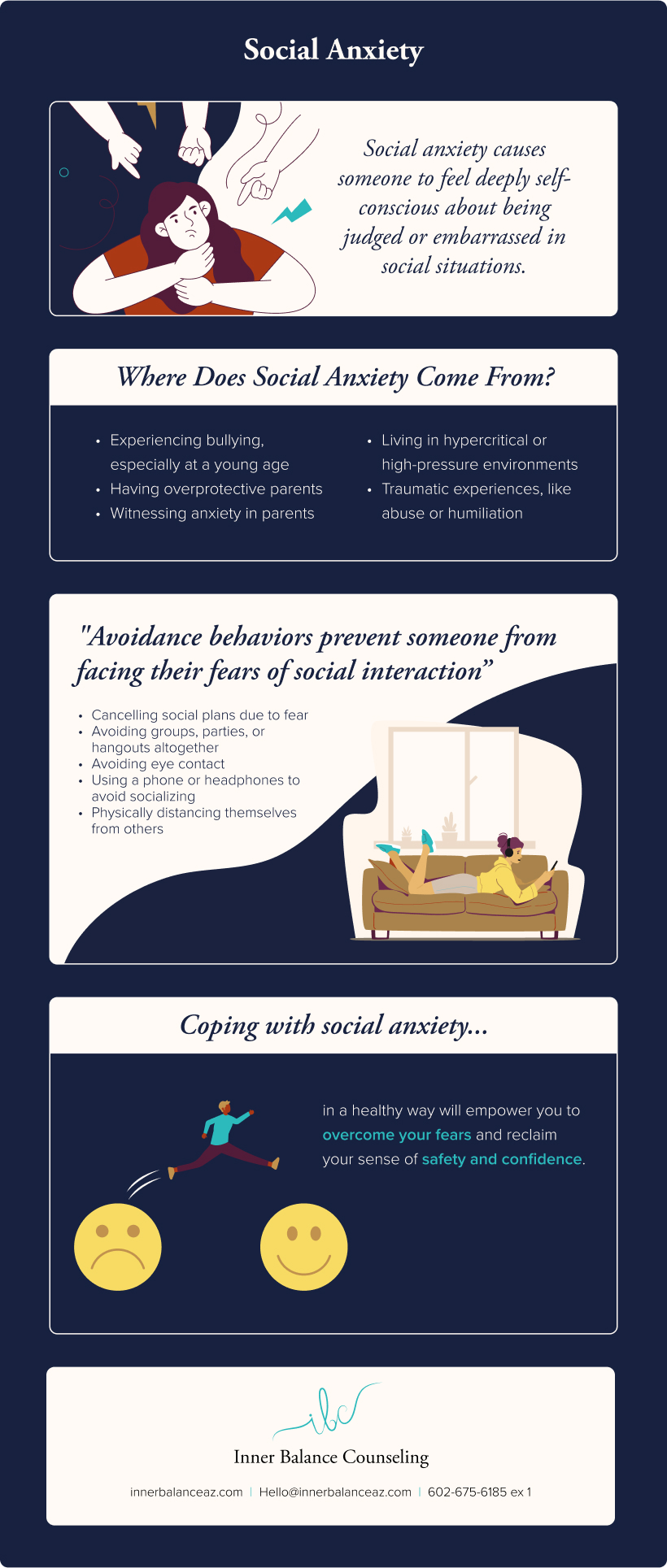
Some of the most noticeable signs of social anxiety are the avoidance behaviors that someone develops to cope with their fear of being judged or embarrassed.
Read our related article to identify the similarities and differences between social anxiety and autism.
Social anxiety is more than just general anxiety or vague nervousness. There are specific thought patterns and core beliefs that shape how someone views themselves and the world around them.
What separates social anxiety from generalized anxiety disorder is the specificity of someone’s fear. Rather than worrying about everything, social anxiety is linked to a specific fear of being seen and judged for who someone truly is.
Those with social anxiety often think that there is something inherently wrong with them, and they believe they will be judged harshly if the world sees the “real” version of them. These thoughts and beliefs seem to be logical to someone with social anxiety, as they’re rooted in the human desire to feel accepted by others.
If you believe that you have social anxiety, it’s important to talk to a mental health professional. Talking to a mental health professional can help you receive an accurate diagnosis and get the treatment you need to live life on your terms.
Treating social anxiety usually involves psychotherapies like Cognitive Behavioral Therapy (CBT). In many cases, treating social anxiety requires a trauma-informed approach to heal someone’s mental health issues.
CBT is one of the most common forms of psychotherapy, and it can be particularly effective at treating anxiety disorders like social anxiety. It works by bridging the gap between someone’s thoughts, emotions, and behaviors.
CBT helps someone identify and reverse the harmful thoughts that lead to negative feelings, which in turn leads to avoidance behaviors and negative coping mechanisms. It not only helps someone reframe the negative perceptions that they have about themselves and the world around them, but it also teaches them how to cope with anxiety in a positive, helpful way.
Learn more about cognitive behavioral therapy at Inner Balance Counseling.
Since social anxiety is often rooted in traumatic experiences, many mental health professionals will take a trauma-informed approach to therapy.
This approach recognizes the harmful impact that trauma has on someone’s mental health, and it emphasizes the importance of safety, trust, and empowerment. By taking a trauma-informed approach to therapy, someone can not only experience relief from the symptoms of social anxiety, but also heal from the trauma that’s at the root of their mental health issues.
Read our related article to answer the question: How long does therapy last?
While it’s best to work with a mental health professional who can guide you along your healing journey, there are several strategies that can help you cope with social anxiety on your own.
If you would like to start exploring ways to cope with anxiety on your own, consider the following recommendations:
Coping with social anxiety in a healthy way will empower you to overcome your fears and reclaim your sense of safety and confidence in social situations. It takes time and patience, but with consistent effort, the right support, and self-compassion, it’s entirely possible to break the cycle of fear and avoidance.

Check Your
Insurance Coverage
Testimonials

“The staff at Inner Balance Counseling is very professional and supportive. They guided me to Jennifer Rizzo. I’m very glad that they did. Jennifer is professional, caring, and always knew what to do and say. Jennifer is also very accommodating to my needs and schedule. I highly recommend Jennifer and Inner Balance Counseling.”
-Richard L.
Meet Our Providers

YOUR PAST DOESN’T DEFINE YOUR FUTURE